

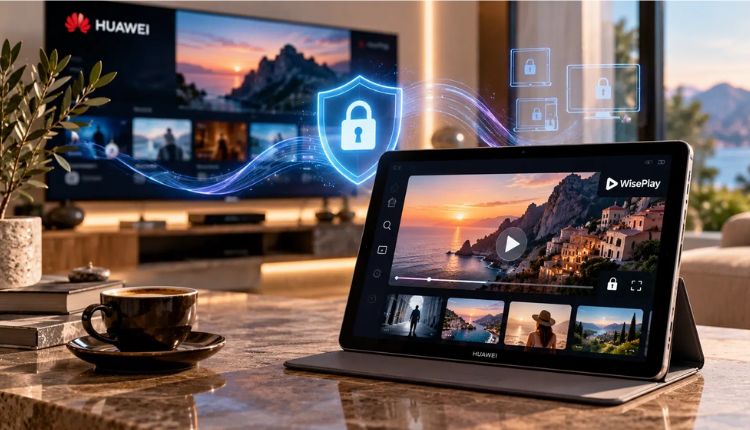
Streaming video should feel simple: viewers choose a title, press play, and expect playback. Behind that experience, however, content providers must coordinate media preparation, application behavior, device compatibility, and protection requirements. Secure playback depends on these elements working together without creating unnecessary friction for audiences.
Huawei devices add another consideration to this process because playback environments can differ by model, operating system, application, and supported security features. Understanding how Huawei WisePlay DRM fits into a protected streaming workflow helps providers plan delivery more carefully, support compatible devices, and protect video content while keeping the viewing experience convenient.
Understanding the Role of DRM in Streaming
Digital rights management helps content providers control how protected video is accessed and played. A DRM system can support encryption, license delivery, and playback rules that determine whether a device or application is authorized to view particular content.
DRM is only one part of a secure streaming service. Content preparation, application security, network communication, and device capabilities also influence how protection works in practice. When these elements are planned together, providers can establish a more consistent workflow, reduce avoidable compatibility issues, and make it easier to investigate playback problems without weakening content protection.
How Huawei WisePlay Fits into Protected Playback
Huawei WisePlay is a DRM technology designed for supported Huawei playback environments. It can be included in a content protection strategy where device compatibility and supported playback formats align with the service’s requirements. Providers need to consider the capabilities of target devices and applications before deciding how WisePlay should be incorporated into delivery.
An implementation also requires coordination between the content workflow and the license service. Media must be prepared in a compatible format, while the playback application must request and handle licenses through the appropriate process. Huawei WisePlay DRM therefore works as part of a broader system rather than as a standalone setting that automatically protects every video or device.
Elements That Shape a Secure Viewing Experience
Secure playback involves several connected components, each with a specific responsibility. Providers should assess how media is prepared, how applications request access, and how supported devices enforce playback rules. An understanding of these components helps teams identify dependencies before content reaches viewers and makes technical decisions easier to communicate across development, operations, and content teams.
Content Encryption
Encryption protects media by making the content unreadable without the appropriate decryption process. During preparation, providers must use compatible encryption settings and ensure that the resulting assets can be handled by the intended playback environment. Correct preparation supports protection while helping prevent avoidable playback failures.
License Delivery
A license service manages the permissions needed for authorized playback. The application typically requests a license when a viewer attempts to access protected content, and the service evaluates the relevant requirements before responding. Reliable communication between the application and license service is important for a consistent viewing experience.
Device Compatibility
Not every device supports the same DRM capabilities, formats, or security features. Providers should identify the Huawei models and software environments they intend to support, then test playback accordingly. Compatibility planning helps teams avoid assuming that one successful device test guarantees support across an entire device range.
Application Integration
The streaming application connects the viewer’s actions with the protected playback workflow. It must handle content selection, license requests, playback responses, and relevant error messages. Careful integration helps users understand what is happening when access is denied, or a technical issue interrupts playback.
Playback Testing
Testing should cover realistic viewing conditions, including different supported devices, network conditions, and content types. Teams can check whether protected assets play as expected, whether license requests complete correctly, and whether errors are handled clearly. Regular testing helps identify problems before they affect a wider audience.
Preparing Content for Compatible Delivery
Content preparation should begin with a clear understanding of the formats and playback environments a service intends to support. Providers need to confirm that their encoding, packaging, encryption, and delivery choices align with the capabilities of the selected DRM systems and target devices.
Teams should also document how protected content moves through the workflow, from source media to packaged assets and delivery infrastructure. Defined responsibilities help clarify who prepares content, who manages license configuration, and who investigates playback issues. When workflows are documented and tested, updates can be introduced with fewer surprises for viewers and technical teams.
Managing Playback Access and User Experience
Access controls should protect content without making legitimate viewing unnecessarily difficult. Providers can establish playback policies that reflect their distribution agreements, supported applications, and audience needs. These policies should be communicated clearly to the systems involved so that the application, license service, and playback environment respond consistently.
When viewers encounter a playback issue, useful error handling can help them understand whether the problem relates to device compatibility, connectivity, account access, or another requirement. Support teams should also have enough technical information to investigate recurring issues without exposing sensitive license or content details.
Building a Maintainable Protection Workflow
A maintainable workflow needs clear ownership, repeatable testing, and documentation that reflects the actual implementation. Providers should record supported formats, device requirements, license configuration, application dependencies, and the steps used to validate playback. This information can help technical teams review changes and resolve issues more efficiently as services evolve.
Protection requirements may change as content libraries, applications, and supported devices expand. Reviewing the workflow periodically helps providers identify outdated assumptions and determine whether new requirements affect existing content or playback environments. A structured review process supports more reliable delivery while keeping security decisions connected to the service’s needs.
Conclusion
Secure playback across Huawei streaming devices depends on coordination between DRM, content preparation, application integration, license delivery, and device compatibility. Understanding these connected elements helps providers plan protection requirements and test supported environments before distributing content to viewers.
For streaming services seeking a structured approach to content protection, Doverunner offers DRM and content security solutions that can support protected media workflows. By evaluating the requirements of their target devices and delivery systems, providers can build a secure playback experience that balances content protection with dependable access for audiences.
